The Dopamine Sprint: Are We Wiring Ourselves to Need Everything Right Now?
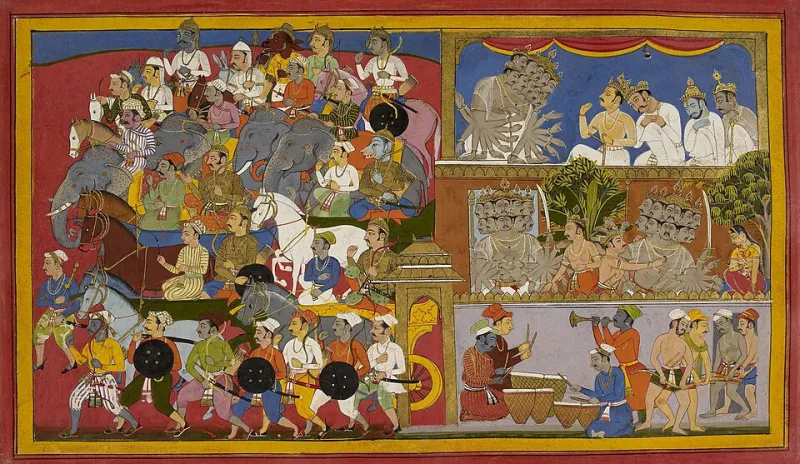
Photo: Sahibdin, CC0, via Wikimedia Commons
Somewhere between your third TikTok scroll, your Hinge match notification, and the endorphin hit from a seven-minute HIIT session you squeezed in before breakfast, something shifted. Not just in your morning routine — in the fundamental architecture of what you expect from life.
We are living inside what behavioral scientists are starting to call the instant dopamine economy: a cultural moment where speed isn't just a preference, it's the baseline expectation. And it's reshaping everything — how we date, how we move our bodies, how we consume entertainment, and maybe most importantly, how our brains are learning to function.
The Machine That Learned What You Want Faster Than You Did
To understand where we are, it helps to understand how we got here. The smartphone didn't just give us faster access to information — it gave platforms real-time data on exactly which content triggered the strongest neurological response, and then optimized relentlessly for that response.
Dopamine, the neurotransmitter at the center of this whole story, isn't actually about pleasure — it's about anticipation. It spikes when we expect a reward, not necessarily when we receive one. Slot machines exploit this. So does the pull-to-refresh gesture on your Instagram feed. So does the moment right before a Hinge match pops up.
"What these platforms have done is engineer the perfect unpredictable reward schedule," says Dr. Anna Lembke, a Stanford psychiatrist and author of Dopamine Nation, in interviews she's given on the subject. "That's the most potent driver of compulsive behavior we know of. More potent than a predictable reward every time."
The result? We've all quietly trained ourselves to crave the next hit before the current one has even landed.
Swipe Culture and the Three-Second Relationship Audition
Nothing captures the instant dopamine economy quite like the modern dating app experience. Hinge, Tinder, and Bumble have spent years iterating toward faster, more frictionless decision-making — and newer entrants are pushing that even further.
Speed dating, once a niche singles event held in hotel conference rooms, has gone fully digital. Apps like Filter Off host live video speed-dating events where users get ninety-second video calls with potential matches before deciding whether to connect. Ninety seconds. The entire premise is that you can feel chemistry — or the absence of it — almost instantly.
And honestly? Users say it works better than endless profile-swiping. The speed forces authenticity in a way that curated photos and carefully workshopped bios simply can't. You get a vibe, or you don't.
But there's a cost. When every romantic interaction is optimized for quick evaluation, patience starts feeling like a bug rather than a feature. Therapists across the country are reporting a pattern: clients who've spent years in swipe culture find it genuinely difficult to tolerate the ambiguity of early-stage relationships — the slow build, the uncertainty, the moments where connection isn't immediately obvious.
"The apps have made people very good at rapid-fire rejection and very bad at sitting with uncertainty," one New York-based couples therapist noted in a recent interview with a national publication. "But real intimacy lives in the uncertainty."
The Seven-Minute Body: Fitness in the Age of No Time
The fitness industry has made a similar pivot. The era of the ninety-minute gym session is giving way to micro-workouts — HIIT circuits, Peloton's ten-minute classes, Apple Fitness+ quick sessions — that promise real physiological results in a fraction of the time.
And to their credit, the science supports the core claim. High-intensity interval training genuinely does deliver cardiovascular and metabolic benefits in compressed timeframes. The American College of Sports Medicine has backed short, intense workouts as legitimate training tools for general fitness. You don't need two hours. You might need twenty minutes, done right.
The problem isn't the short workout. The problem is when the speed itself becomes the point — when the goal shifts from getting healthier to getting the dopamine hit of completion, the green ring closing on your Apple Watch, the Strava kudos from your followers.
Platforms like BeReal tried to disrupt the highlight-reel culture of fitness social media. They mostly failed. Because the highlight reel is what generates the dopamine. Progress photos, PR announcements, transformation posts — these aren't just vanity. They're the reward mechanism that keeps people coming back. The question is whether they're keeping people genuinely healthy or just genuinely hooked.
Viral Moments and the Fifteen-Second Attention Span
Then there's entertainment — or what entertainment has become. The average TikTok video is somewhere between fifteen and sixty seconds. YouTube Shorts competes in the same space. Instagram Reels. Snapchat Spotlight. The entire short-form video industrial complex is built on one insight: people will watch something for a few seconds, feel something, and move on — and they will do this hundreds of times a day without ever feeling full.
This isn't purely a bad thing. Short-form content has democratized creativity, launched careers, surfaced genuinely important cultural conversations, and made people laugh during some genuinely rough years. The format has real value.
But neuroscientists are raising a flag that deserves attention. Extended exposure to rapid-fire content — videos that cut every two seconds, feeds that refresh with new stimulation before the old stimulation has processed — appears to be compressing our tolerance for slower-paced experiences. Reading a long article. Watching a two-hour film without checking your phone. Having a conversation that doesn't resolve in five minutes.
These aren't small losses.
Is Maximum Speed Actually Sustainable?
Here's the question underneath all of this: can you run a dopamine sprint indefinitely? The short answer, from every behavioral psychologist paying attention, is no.
Dopamine tolerance is real. The hit that felt electric six months ago requires a stronger stimulus today. Platforms know this, which is why content keeps getting shorter, more intense, more algorithmically precise. But the human nervous system wasn't designed for perpetual high-frequency stimulation. Anxiety rates in the US have climbed steadily alongside smartphone adoption. Sleep disruption is at historic levels. The correlation isn't proof of causation — but it's not nothing, either.
The good news is that awareness is the first leverage point. More Americans are experimenting with digital minimalism, intentional screen-free periods, and what some researchers call "dopamine fasting" — structured breaks from high-stimulation inputs that allow the brain's reward sensitivity to recalibrate.
The goal isn't to opt out of speed entirely. That ship has sailed, and honestly, a lot of what speed culture has delivered is genuinely good — efficiency, access, connection, creativity. The goal is to stay in the driver's seat. To choose speed when it serves you and slow down when it doesn't.
Because here's the irony at the center of all of this: the people who will actually thrive in the instant dopamine economy aren't the ones who run the fastest. They're the ones who know when to hit the brakes.